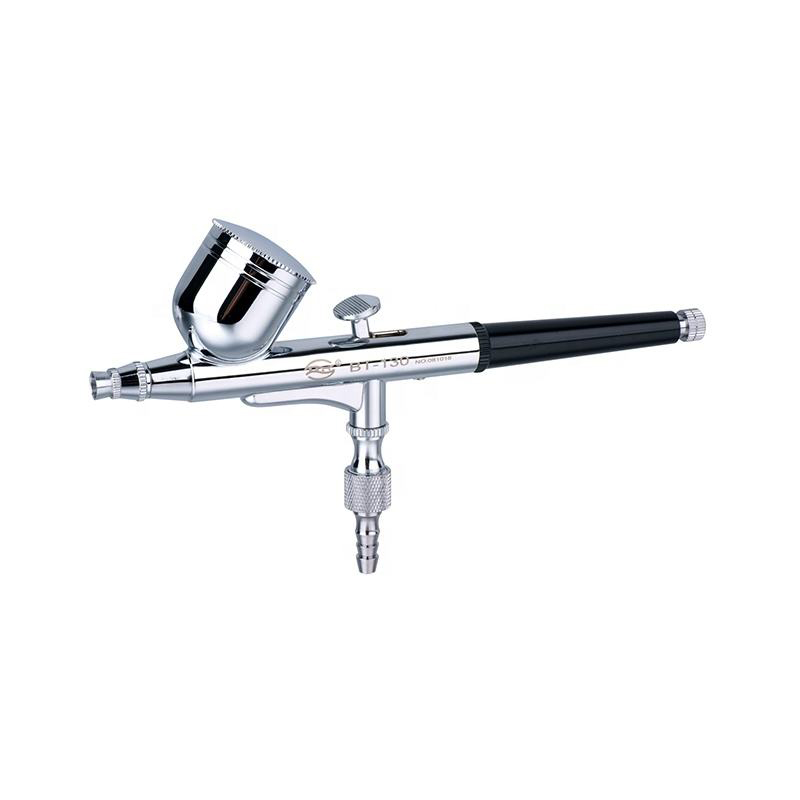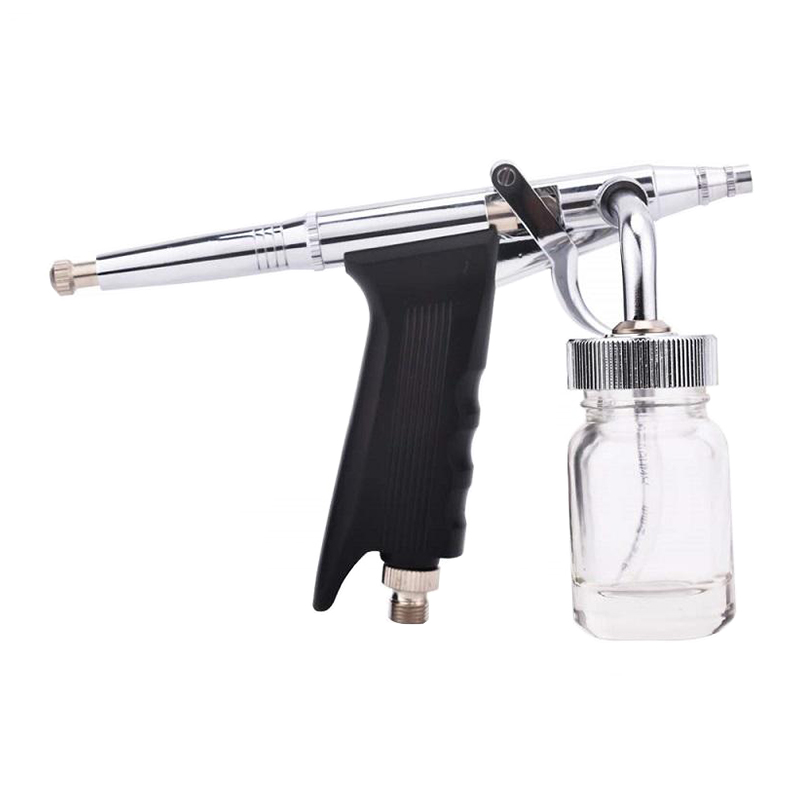
 English
 русский
Oct 19,2026
Content
- 1 Is an Airbrush Better for Wrinkles?
- 2 How Airbrush Technology Reduces the Look of Fine Lines
- 3 Airbrush vs Traditional Application on Mature Skin
- 4 Choosing the Right Airbrush Skin Care Equipment
- 5 Step-by-Step: Airbrushing Over Wrinkles Correctly
- 6 Who Benefits Most from Airbrush Skin Care
- 7 Frequently Asked Questions About Airbrush and Wrinkles
- 8 Final Thoughts
Is an Airbrush Better for Wrinkles?
Yes, an airbrush is generally better for wrinkles than sponges, brushes, or fingers. Airbrush skin care equipment turns liquid foundation, primer, or tanning solution into a fine mist, and that mist settles on the skin as a thin, breathable veil instead of being physically pressed into every crease. Wrinkles and fine lines are naturally recessed, so any thick or heavy product tends to pool inside them, making the lines look deeper under daylight or camera flash. Airbrush application avoids this problem almost entirely because the particles are too small and light to gather in one spot.
This is why airbrush skin care has become the preferred technique among professional makeup artists working with bridal clients, on-camera talent, and mature skin. The remainder of this article breaks down exactly why this happens, how to choose the right equipment, and how to apply it correctly for the smoothest possible result.
How Airbrush Technology Reduces the Look of Fine Lines
To understand why airbrush skin care outperforms traditional application on textured skin, it helps to look at what actually happens at the surface level when product meets skin.
A Fine Mist Instead of a Thick Layer
A typical airbrush nozzle used for facial skin care work ranges from about 0.2mm to 0.3mm, while airbrush tanning nozzles are often slightly larger, around 0.3mm to 0.4mm. At this size, product is broken into droplets so fine that they land as a light dusting on top of the skin rather than being dragged across it. Sponges and brushes work in the opposite way, physically pushing product into every groove, pore, and crease, which is exactly why foundation can look heavier and more visible in wrinkled areas by the end of the day.
Adjustable, Buildable Coverage
Most airbrush kits allow the user to control both air pressure and trigger flow, which means coverage can be built gradually in thin layers rather than applied all at once. Thin, buildable layers create a more natural finish on textured or aging skin compared with a single heavy application, which tends to crack, crease, or gather along expression lines as it dries and the face moves.
Flexible Finish That Moves With the Skin
Because airbrush layers are thin, they flex naturally as facial muscles move throughout the day. A heavy layer of cream product, on the other hand, can sit rigidly on the surface and crack along dynamic lines around the eyes and mouth, drawing more attention to the very areas most people want to soften.
- Lighter feel on the skin, reducing a heavy or mask-like appearance
- Even distribution that does not pool in wrinkles, pores, or texture
- Longer wear time because thin layers flex with natural movement
- Works with water-based, silicone-based, and tanning formulas alike
- Reduces the need for heavy powder setting, which can also settle into lines
Airbrush vs Traditional Application on Mature Skin
The comparison below outlines how airbrush skin care equipment performs against traditional application methods when the primary goal is minimizing the visual impact of wrinkles and fine lines.
| Method | Layer Thickness | Settles Into Wrinkles | Coverage Control | Wear Time |
|---|---|---|---|---|
| Airbrush Gun | Very thin, mist-based | Low | High, adjustable | Long |
| Sponge or Brush | Medium to heavy | Medium to high | Moderate | Moderate |
| Fingers or Cream | Uneven, thick in creases | High | Low | Short |
No application method can eliminate deep, static wrinkles caused by lost collagen or sun damage. What airbrush skin care does achieve is a consistently smoother visual finish, because it avoids the pressure, drag, and product buildup that other methods introduce around the eyes, forehead, and mouth.
Choosing the Right Airbrush Skin Care Equipment
Not every airbrush setup is built the same way, and the right equipment choice makes a real difference when the goal is softening wrinkles rather than covering a large surface like the body.
Nozzle Size Matters
For facial foundation and concealer, a 0.2mm to 0.3mm nozzle is generally recommended. Smaller nozzles atomize product into finer particles, which is exactly what is needed for delicate areas around the eyes and mouth where wrinkles are most visible. Larger nozzles, closer to 0.4mm, are better suited to airbrush tanning or body work where speed and coverage over a large area matter more than fine detail.
Compressor Stability
A quiet, low-vibration mini air compressor with adjustable PSI gives more consistent mist quality than a basic unit with only one speed setting. Unstable air pressure causes the spray to spatter, which recreates the exact texture problem airbrushing is meant to solve in the first place.
Key Equipment Categories
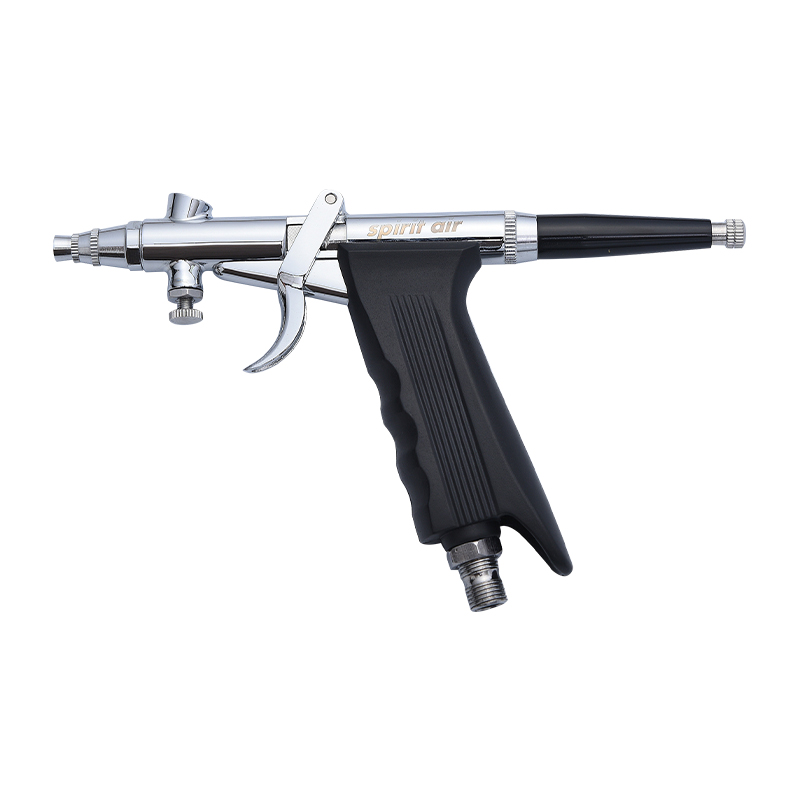
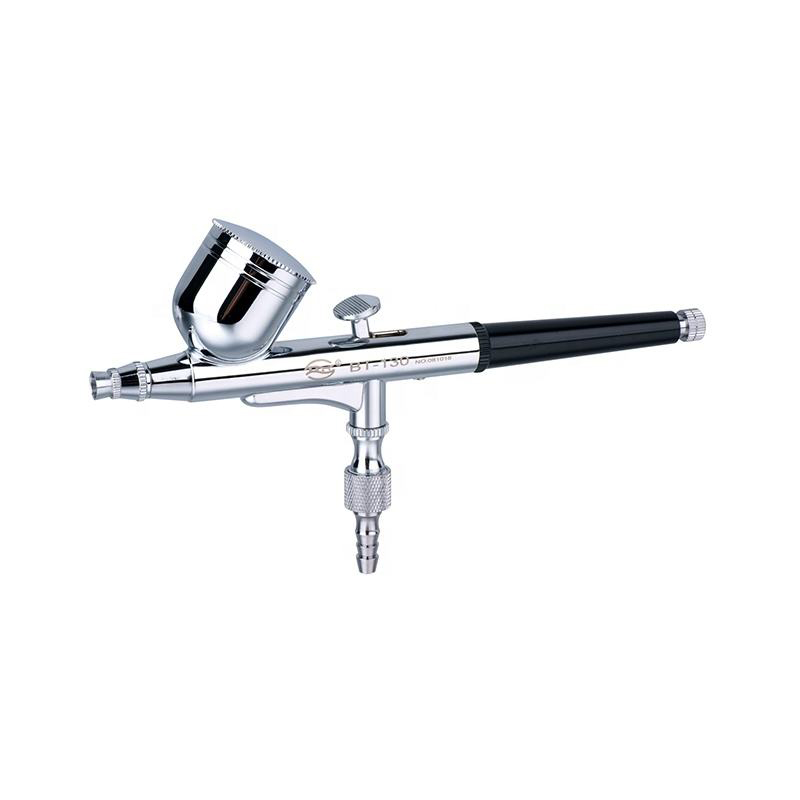
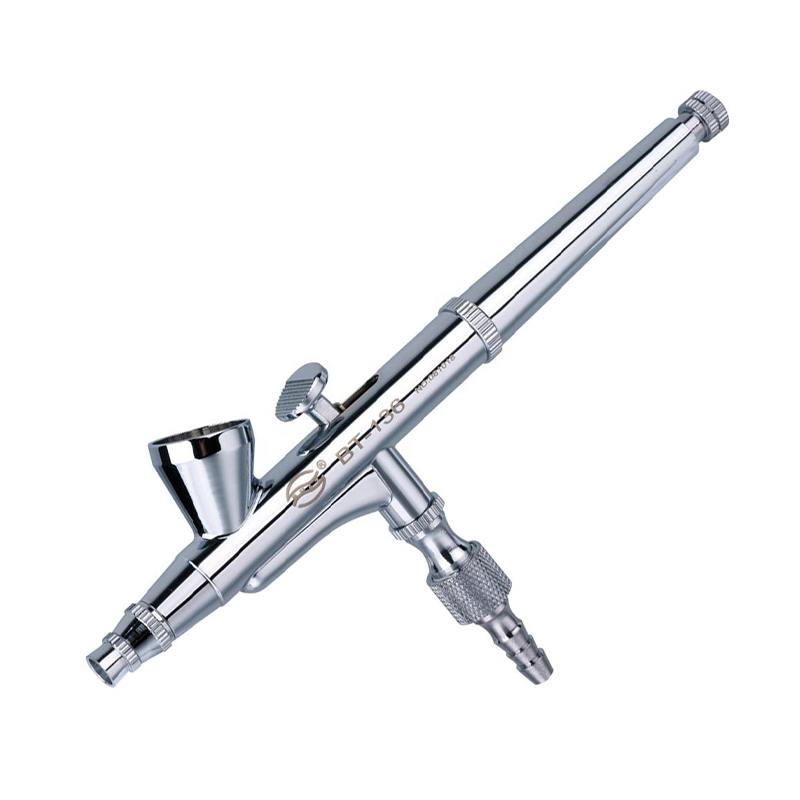
- Airbrush guns with 0.2mm to 0.3mm nozzles for facial foundation and concealer
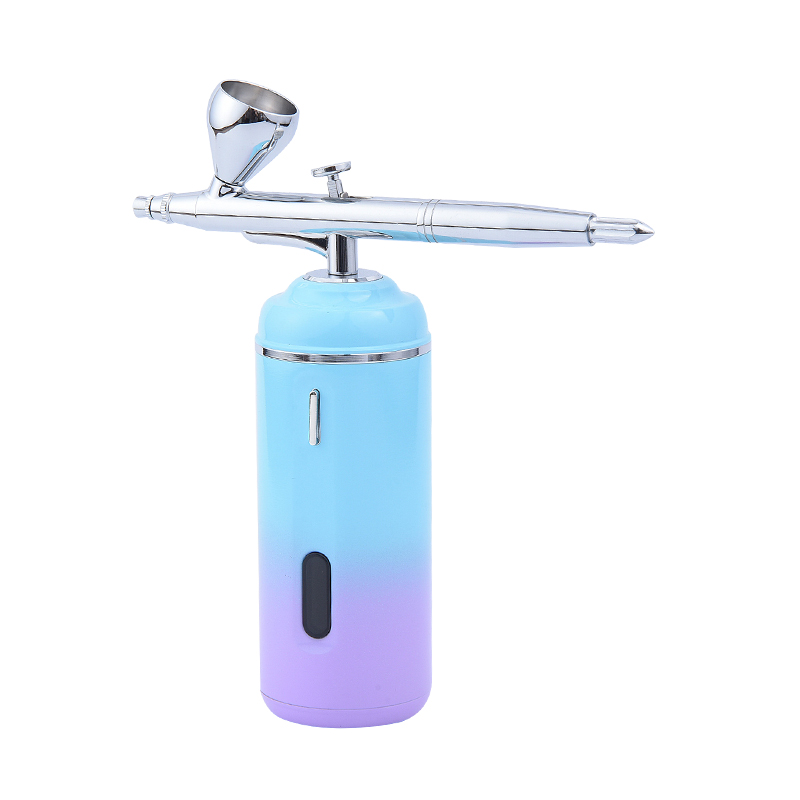
- Portable airbrush kits with a built-in mini air compressor for home or on-location use
- Airbrush tanning guns with slightly larger nozzles for even, full-body coverage
- Compact compressors with adjustable PSI for controlling mist fineness
- Airbrush accessories such as cleaning kits, hoses, and holders to maintain spray quality
Consistent nozzle precision is one of the most overlooked factors in airbrush skin care results. A worn or poorly machined nozzle produces uneven mist that can spatter unpredictably. Because of this, many salons, studios, and beauty brands source their airbrush skin care equipment through experienced OEM and ODM manufacturing partners to keep nozzle tolerances, compressor output, and build quality consistent across every unit produced.
Step-by-Step: Airbrushing Over Wrinkles Correctly
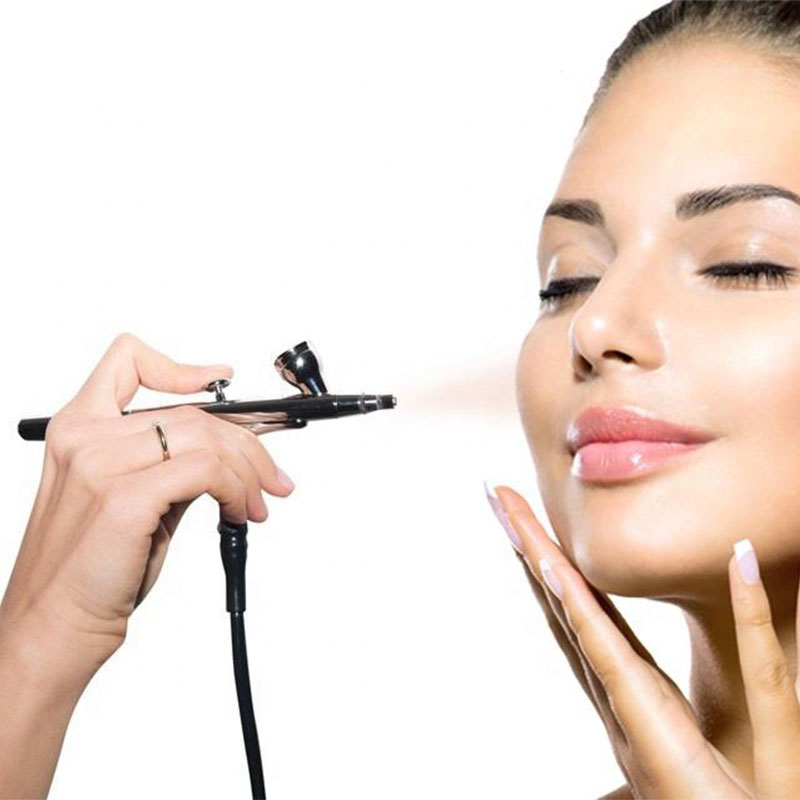
Technique affects the final result just as much as the equipment itself. Following a consistent process helps prevent product from settling into fine lines around the eyes, mouth, and forehead.
- Cleanse and moisturize the skin so the mist has a smooth, hydrated surface to land on
- Hold the airbrush gun 15 to 20 centimeters from the face for even dispersion
- Apply in slow, circular passes rather than stopping or lingering in one spot
- Build coverage in two to three thin layers instead of one heavy pass
- Allow each layer a few seconds to set before adding the next
- Move slightly faster and hold the gun a touch farther away around the eyes and mouth
- Finish with a light setting mist to help the layer stay flexible throughout the day
Distance and speed are the two most common mistakes beginners make. Holding the gun too close or moving too slowly causes product to concentrate in one area, which settles into a wrinkle in much the same way heavy cream foundation would.
Who Benefits Most from Airbrush Skin Care
Airbrush application is especially useful for anyone with visible fine lines, enlarged pores, or textured skin who still wants full coverage for photography, video, or long events. Makeup artists working with bridal clients or on-camera talent frequently choose airbrush skin care equipment because high-definition cameras make heavy or cakey product far more noticeable than the human eye would under normal daylight.
At-home users with mature skin also benefit significantly, particularly with compact, portable airbrush kits that pair a small mini air compressor with a lightweight gun. These setups are easier to control at close range, which helps avoid over-application around the eyes and mouth, the two areas where wrinkles are usually most visible.
Common Situations Where Airbrush Helps
- Wedding and event makeup that needs to last many hours without cracking
- On-camera and photography work under strong, direct lighting
- Daily wear for mature skin looking for a lighter feel than cream foundation
- Airbrush tanning for an even tone without streaking around joints and creases
Frequently Asked Questions About Airbrush and Wrinkles
Does airbrush makeup make wrinkles look worse?
Not when applied correctly. Airbrush makeup only accentuates wrinkles if the layers are too heavy or the gun is held too close, causing product to pool. With thin, well-distributed layers, airbrush skin care typically looks smoother than traditional application.
What nozzle size is best for facial airbrushing?
A 0.2mm to 0.3mm nozzle is generally best for facial foundation and concealer, since it produces the fine mist needed for delicate, textured areas.
Can airbrush equipment be used for both foundation and tanning?
Yes, but the nozzle size should be matched to the task. Smaller nozzles suit facial foundation, while slightly larger nozzles are more efficient for airbrush tanning across larger areas of the body.
Final Thoughts
An airbrush is generally better for wrinkles because it applies product as a fine, even mist instead of pressing it into the skin. The combination of thin layering, adjustable coverage, and a light, flexible finish makes airbrush skin care a practical choice for anyone concerned about fine lines showing through their foundation or tanning solution. Choosing the correct nozzle size, pairing it with a stable mini air compressor, and following a slow, layered application technique will consistently give the most natural-looking result on textured or aging skin.