 English
 русский
Sep 07,2026
Content
- 1 Can Any Airbrush Be Used for Cake Decorating? The Direct Answer
- 2 What Makes an Airbrush Suitable for Cake Decoration
- 3 Comparing Airbrush Types for Cake Decoration
- 4 Key Specifications to Look For in Airbrush Cake Decoration Equipment
- 5 Setting Up an Airbrush for Cake Decorating Step by Step
- 6 Cleaning and Maintaining a Cake Decoration Airbrush
- 7 Choosing a Reliable Airbrush Cake Decoration Manufacturer
- 8 Frequently Asked Questions About Airbrush Cake Decorating
Can Any Airbrush Be Used for Cake Decorating? The Direct Answer
No, not any airbrush should be used for cake decorating. While most dual-action or single-action airbrushes are mechanically capable of spraying edible color, an airbrush that has previously sprayed acrylic paint, ink, or auto touch-up coatings should never be reused on food, because trace pigment residue and metal solvents can contaminate the coloring and pose a health risk. The safe and practical answer is to use a dedicated Airbrush Cake Decoration unit, or at minimum a gravity-feed or siphon-feed airbrush that has only ever been used with food-safe, water-based edible colors and is cleaned according to food-contact standards after every session.
In other words, the tool itself is not the limiting factor, the history and dedication of that tool is. A brand-new dual-action airbrush with a 0.3mm to 0.5mm nozzle is well suited to cake work, but a secondhand airbrush that once sprayed enamel model paint or automotive lacquer is not, regardless of how thoroughly it appears to have been cleaned. The rest of this guide explains what actually makes an airbrush appropriate for cake decorating, which specifications matter most, and how to set up and maintain a unit for consistent, food-safe results.
What Makes an Airbrush Suitable for Cake Decoration
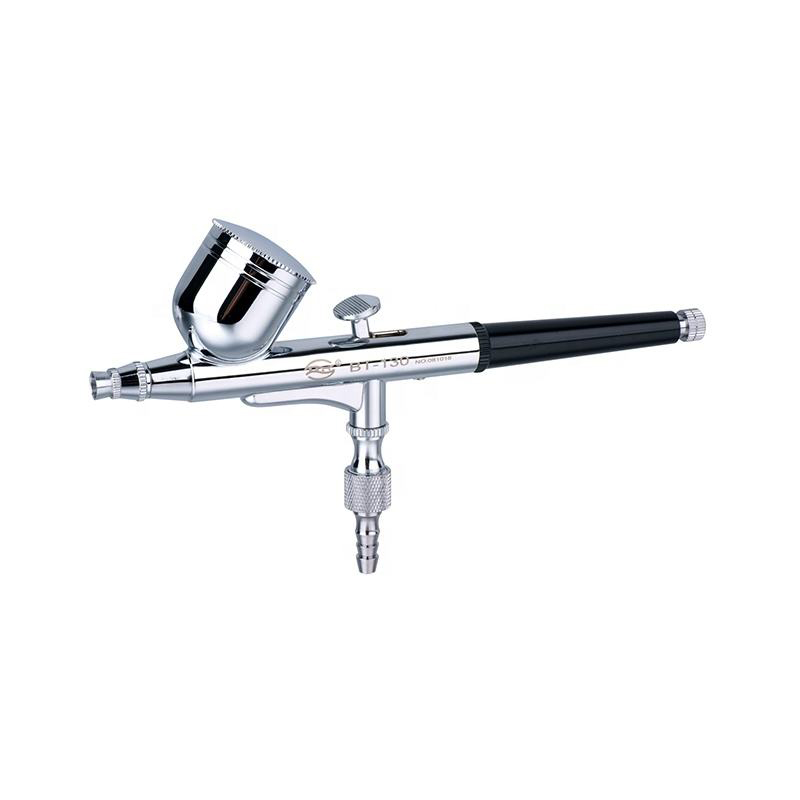
An airbrush becomes suitable for cake decoration when three conditions are met: it uses food-contact-safe internal materials, it has never been cross-used with non-edible paints, and it is paired with an air source that can deliver low, controllable pressure. Most cake decorators use dual-action, gravity-feed airbrushes because the gravity-fed cup sits on top of the body, which allows small amounts of edible color to be loaded, changed, and cleaned quickly between shades. This design also reduces the amount of leftover color wasted at the bottom of a siphon tube, which matters when working with small batches of specialty edible color.
Dedicated Use Prevents Cross-Contamination
The single biggest risk in reusing a general-purpose airbrush for food is cross-contamination from prior non-food pigments trapped in the needle channel, nozzle threads, or internal seals. Even a thorough cleaning with water or alcohol cannot always remove micro-residues from oil-based or solvent-based paints lodged in fine machined grooves. For this reason, most professional bakeries keep a separate Airbrush Cake Decoration unit that is never used for anything other than edible color, and many home decorators follow the same practice by clearly labeling and storing a cake-only airbrush apart from their hobby or craft airbrushes.
Comparing Airbrush Types for Cake Decoration
| Airbrush Type | Color Cup Position | Best For | Cleaning Effort |
|---|---|---|---|
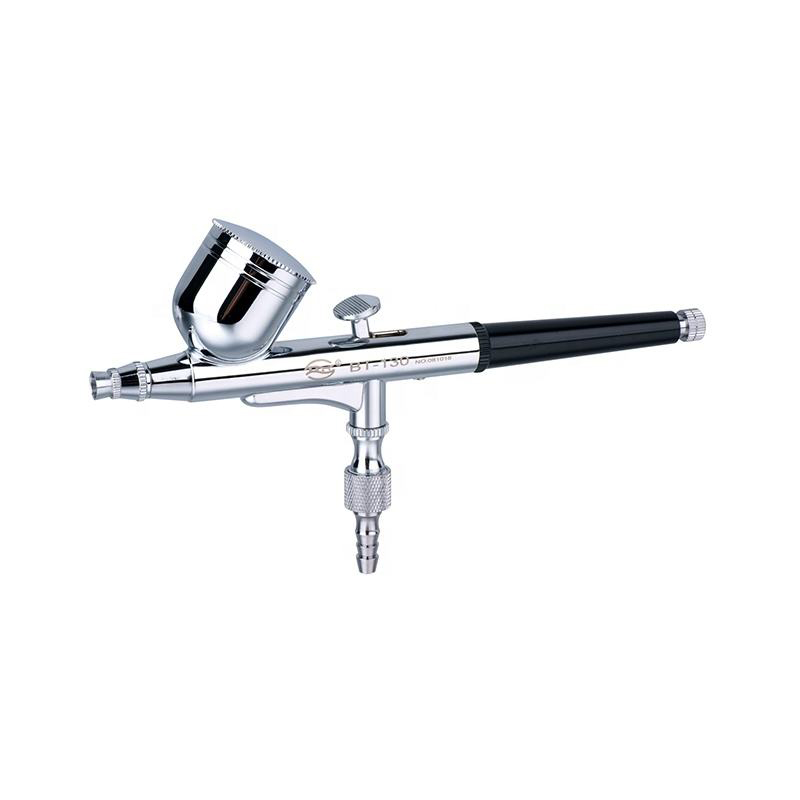
| Dual-Action Gravity Feed | Top mounted | Fine detail, color blending, fondant highlights | Low, minimal color waste |
| Single-Action Gravity Feed | Top mounted | Beginners, base color coating | Low |
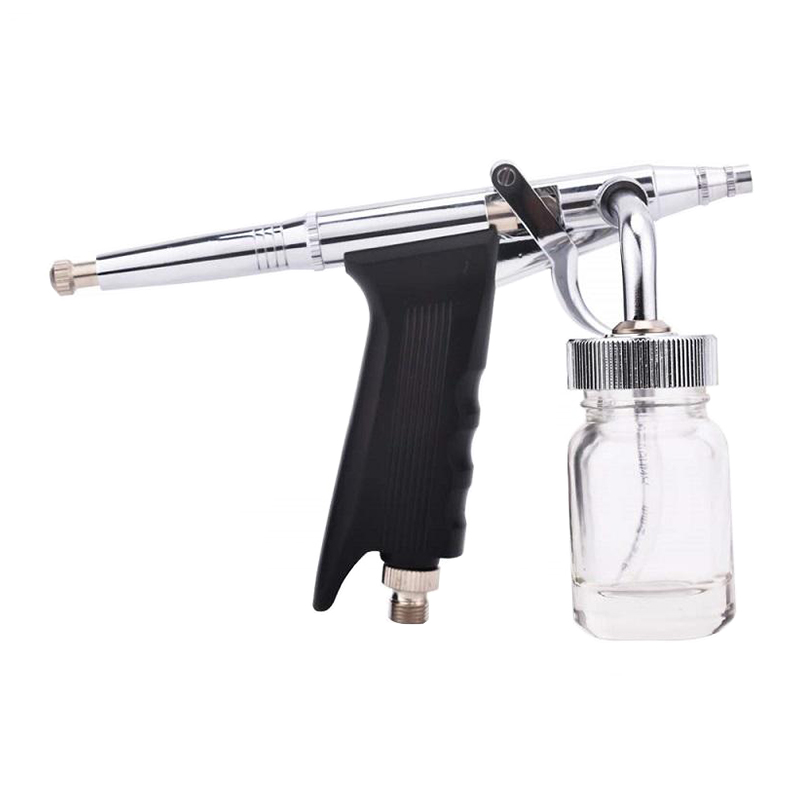
| Siphon Feed | Side or bottom mounted | Large batches, wide even coverage | Higher, more residual color |
For most cake decorators, a dual-action gravity-feed airbrush offers the best balance of control and cleanup speed. It allows the operator to control air and color flow independently with a single trigger, which is what makes fine details like petal shading, ombre backgrounds, and stenciled patterns achievable on fondant and buttercream surfaces.
Key Specifications to Look For in Airbrush Cake Decoration Equipment
Choosing the right specification matters more than brand name when shopping for cake-specific airbrush equipment. The following factors have the greatest impact on how well an airbrush performs on cake surfaces.
- Nozzle size between 0.3mm and 0.5mm, which balances fine detail work with the slightly thicker viscosity of edible color compared to standard paint
- Operating pressure between 15 and 30 PSI, since cake surfaces are soft and easily oversaturated at higher pressure
- A small-capacity color cup, typically 2ml to 7ml, to match the smaller volumes used for cake work compared to larger spray projects
- Food-contact-safe seals and nozzle material that resist staining from concentrated food dyes
- A compact, low-noise air compressor rated for continuous light-duty use, since cake sessions often involve repeated short bursts rather than continuous spraying
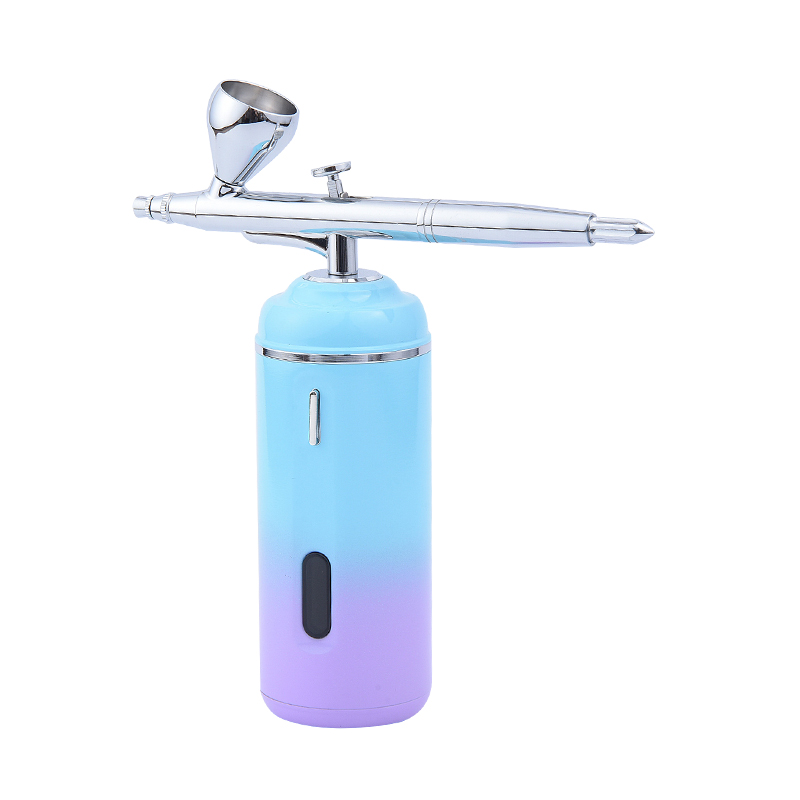
A complete Airbrush Cake Decoration kit that bundles a dual-action airbrush with a matched mini compressor removes much of the guesswork, since the pressure output and nozzle are pre-calibrated to work together rather than requiring separate components to be matched manually.
Setting Up an Airbrush for Cake Decorating Step by Step
- Connect the airbrush to a compressor set to a low starting pressure, around 15 to 20 PSI, and increase gradually only if the spray pattern appears too fine or inconsistent
- Load food-safe edible airbrush color into the cup, diluting slightly with water or a manufacturer-recommended thinner if the color is too thick to atomize cleanly
- Test the spray pattern on a spare piece of parchment or fondant scrap before applying it to the finished cake
- Hold the airbrush 15 to 20 centimeters from the cake surface for broad color washes, and closer for fine detail lines
- Work in thin layers, allowing each pass to dry briefly before adding depth, since edible color builds up faster than expected on porous fondant
Following this sequence helps prevent the two most common beginner mistakes: oversaturating the cake surface so the color pools or runs, and clogging the nozzle by loading color that has not been properly strained or thinned.
Cleaning and Maintaining a Cake Decoration Airbrush
Because edible colors contain sugars and thickeners not found in standard craft paint, they dry faster inside the nozzle and needle channel, which makes cleaning between colors and after every session especially important. Skipping this step is the most common reason a cake decorating airbrush starts spitting, sputtering, or producing an uneven spray pattern within just a few uses.
Between-Color Cleaning
Empty the cup, run a small amount of warm water through the airbrush, and wipe the nozzle tip with a soft cloth before switching to a new shade. This prevents muddy color mixing and keeps fine detail lines crisp.
Full Cleaning After Each Session
Disassemble the needle and nozzle according to the manufacturer's instructions, soak the removable parts in warm water, and use a fine cleaning brush to clear any dried color from the nozzle cap threads. Reassemble only once all parts are fully dry to avoid trapping moisture that can cause corrosion over repeated use.
Choosing a Reliable Airbrush Cake Decoration Manufacturer
Sourcing airbrush equipment from a manufacturer that understands the specific demands of edible color work makes a measurable difference in long-term reliability. Ningbo Bolt Mechanical and Electrical Technology Co., Ltd., based in Ningbo, China, has more than 15 years of experience manufacturing airbrushes, mini air compressors, and spray guns, and produces dedicated Airbrush Cake Decoration kits alongside its wider airbrush product range. The company's products are CE and GS certified, and its facility covers 20,000 square meters with the capacity to produce tens of thousands of airbrush and compressor units annually.
When comparing suppliers of cake decorating airbrush equipment, the following factors are worth checking before ordering in volume.
- Confirmed food-contact-safe materials for the nozzle, needle, and cup
- Availability of matched compressor and airbrush kits rather than mismatched components
- Recognized safety certification such as CE and GS
- Consistent nozzle tolerances across production batches, which affects spray pattern repeatability
A well-matched Airbrush Cake Decoration kit from an experienced manufacturer reduces the trial-and-error typically involved in achieving smooth, professional-looking color work on fondant and buttercream.
Frequently Asked Questions About Airbrush Cake Decorating
Do I need a special compressor for cake decorating airbrush work?
A standard mini airbrush compressor rated for 15 to 30 PSI is sufficient for most cake decorating tasks. A high-output compressor designed for automotive spray work is generally unnecessary and can make fine control more difficult on soft cake surfaces.
Can food coloring be used in a regular airbrush instead of edible airbrush color?
Standard liquid food coloring is usually too thin and can affect the texture of fondant or buttercream, so purpose-made edible airbrush color, which is formulated for correct viscosity and even atomization, generally produces better and more predictable results.
How do I know if my airbrush is safe to reuse for cake decorating?
If the airbrush has ever been used with non-food paint, ink, or solvent-based coatings, it should not be repurposed for cake decorating regardless of cleaning, since residues can remain lodged in internal threads and seals. A dedicated unit used exclusively with edible color is the safer choice.