 English
 русский
Oct 05,2026
Content
Direct Answer: The Ideal Paint for Airbrushing
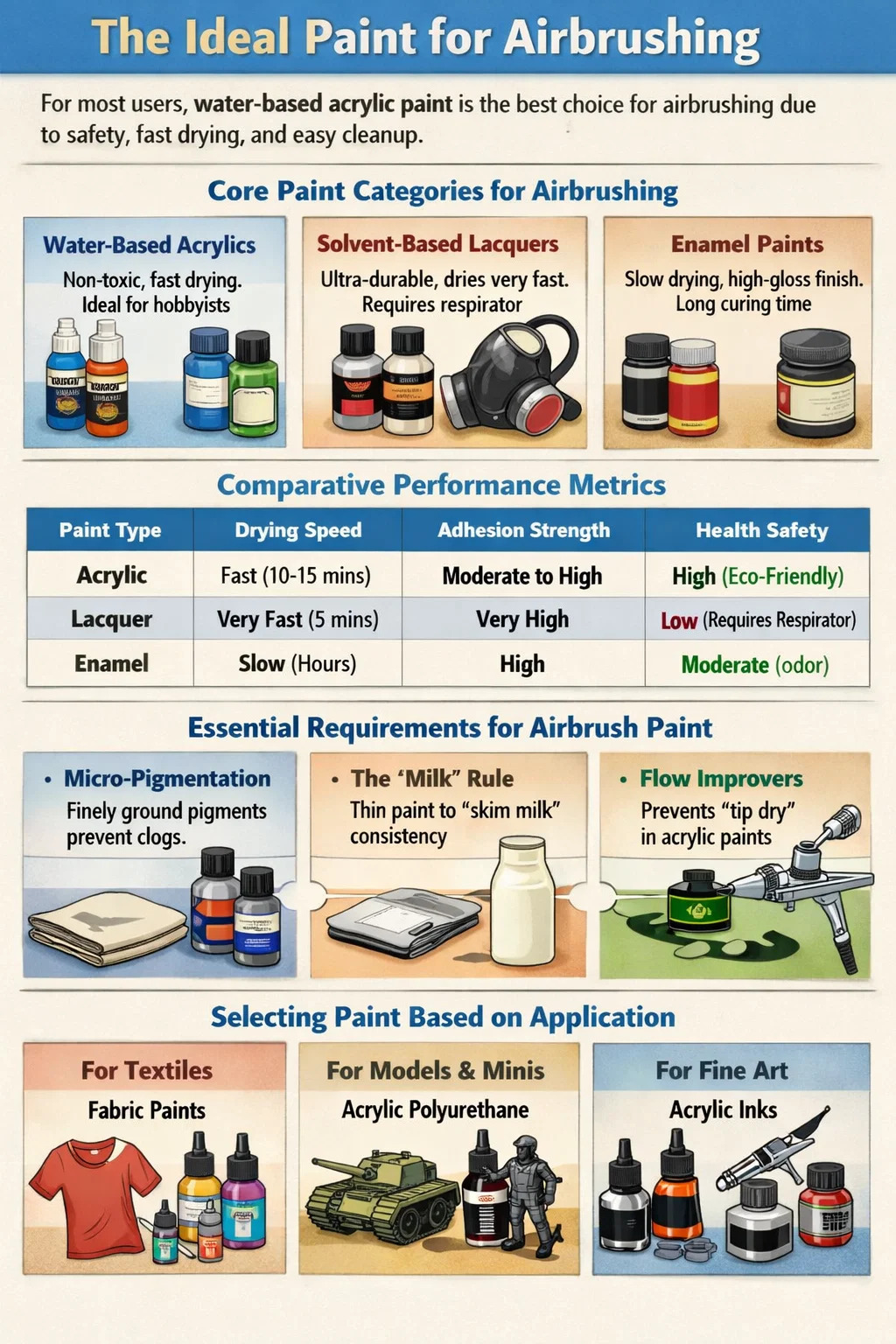
For the vast majority of users, water-based acrylic paint is the best choice for airbrushing. It offers an optimal balance of non-toxic safety, rapid drying times, and easy cleanup with simple water or specialized cleaners. While advanced hobbyists may utilize lacquers for extreme durability, acrylics are the industry standard for general illustration, scale modeling, and textile work due to their versatility across various surfaces and minimal chemical odor.
Core Paint Categories for Airbrushing
Successful airbrushing depends on matching the chemical binder of the paint to your specific project needs. Here are the three primary types of media used in an airbrush.
Water-Based Acrylics
These paints use water and acrylic resin as the carrier. Leading brands like Createx and Vallejo produce pigments micronized to stay suspended in thin mixtures, preventing clogs in nozzles as fine as 0.15mm to 0.3mm. They are the go-to for indoor hobbyists without professional ventilation booths.
Solvent-Based Lacquers
Lacquers are favored by professional modelers for their "bite," where the solvent slightly etches the plastic surface for an ultra-strong bond. They dry almost instantly and can be thinned to an incredibly fine consistency, making them perfect for high-detail work. However, a respirator and active exhaust fan are mandatory due to strong fumes.
Enamel Paints
Enamels offer a long "open time," meaning they stay wet longer. This allows the paint to level out perfectly on the surface, resulting in a flawless, high-gloss finish. They are often used for automotive models but require 6 to 24 hours to fully cure.
Comparative Performance Metrics
The following table provides a breakdown of how different airbrush paints perform in common workshop conditions.
| Paint Type | Drying Speed | Adhesion Strength | Health Safety |
|---|---|---|---|
| Acrylic | Fast (10-15 mins) | Moderate to High | High (Eco-friendly) |
| Lacquer | Very Fast (5 mins) | Very High | Low (Requires Respirator) |
| Enamel | Slow (Hours) | High | Moderate (Odor) |
Essential Requirements for Airbrush Paint
To ensure your airbrush operates smoothly and produces professional results, the paint must meet specific mechanical criteria:
- Micro-Pigmentation: Standard craft paints often contain large pigment chunks that instantly block a 0.3mm nozzle. Dedicated airbrush paints are micronized for effortless flow.
- The "Milk" Rule: All paint used in an airbrush should be thinned to the consistency of skim milk. If it is too thick, the airbrush will "spit" droplets; if too thin, it will "spiderweb" on the surface.
- Flow Improvers: For acrylics, using a flow improver helps prevent "tip dry"—the buildup of dried paint on the needle tip during long spraying sessions.
Selecting Paint Based on Application
Matching your airbrush paint to your substrate is critical for a lasting finish.
For Textiles and Custom Apparel
Use specialized textile acrylics. These paints contain flexible binders that allow the design to stretch with the fabric and withstand machine washing without cracking.
For Plastic Models and Miniatures
High-grade acrylic-polyurethane hybrids are best. They provide the safety of water-based paints but cure to a hard shell that resists handling during tabletop gaming.
For Fine Art and Illustration
Acrylic Inks are often the superior choice here. They are incredibly thin and highly pigmented, allowing for extreme detail at low pressures (10-15 PSI) without the need for heavy thinning.