 English
 русский
Oct 05,2026
Content
- 1 The Airbrush Gun: Your Most Important Choice
- 2 Air Compressor: The Power Behind Your Airbrush
- 3 Air Hose: The Connector You Cannot Overlook
- 4 Airbrush-Compatible Paints: Getting the Right Consistency
- 5 Cleaning Supplies: Non-Negotiable for Every Session
- 6 Highly Recommended Accessories for Better Results
- 7 Common Beginner Mistakes to Avoid in Airbrush Painting
- 8 What Applications Can You Use Airbrush Painting For?
- 9 Your Starter Checklist: Everything Needed to Begin Airbrush Painting
The Airbrush Gun: Your Most Important Choice
The airbrush itself is the centerpiece of any airbrush painting setup. Understanding the key design differences will help you choose the right tool for your intended use.
Action Type
Single Action vs. Dual Action
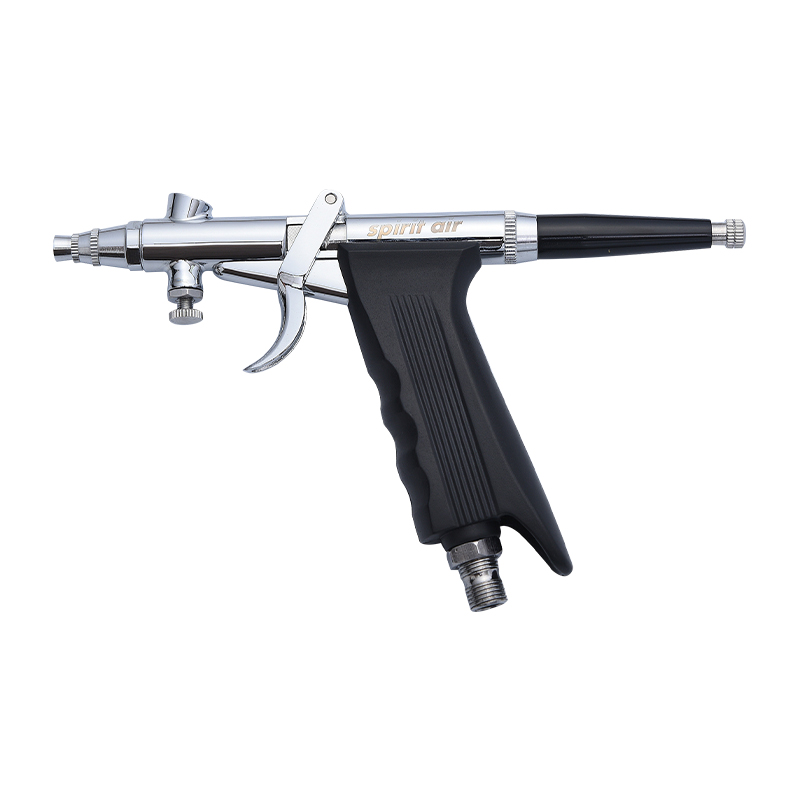
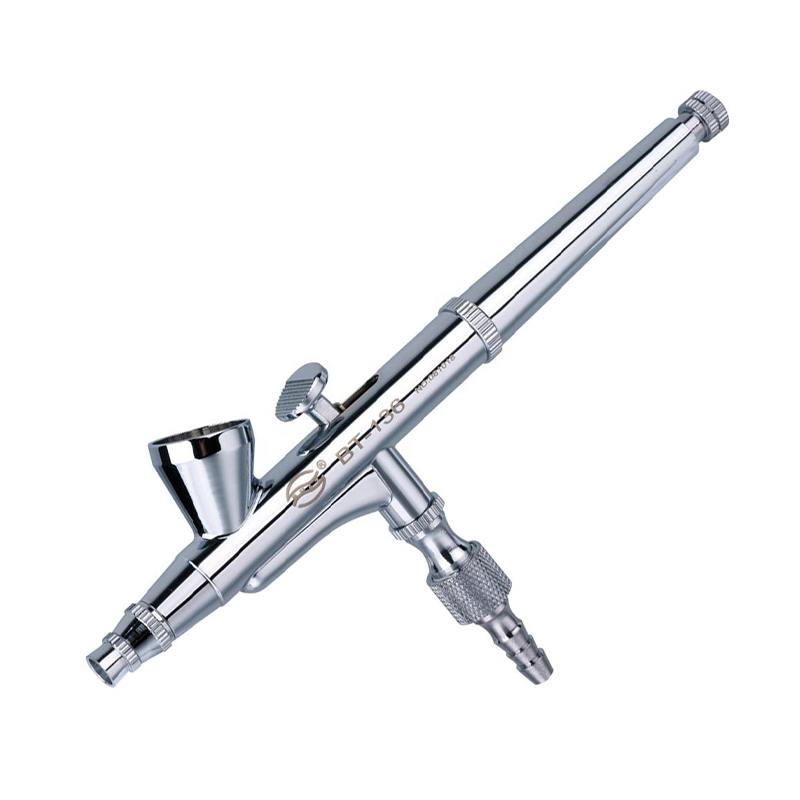
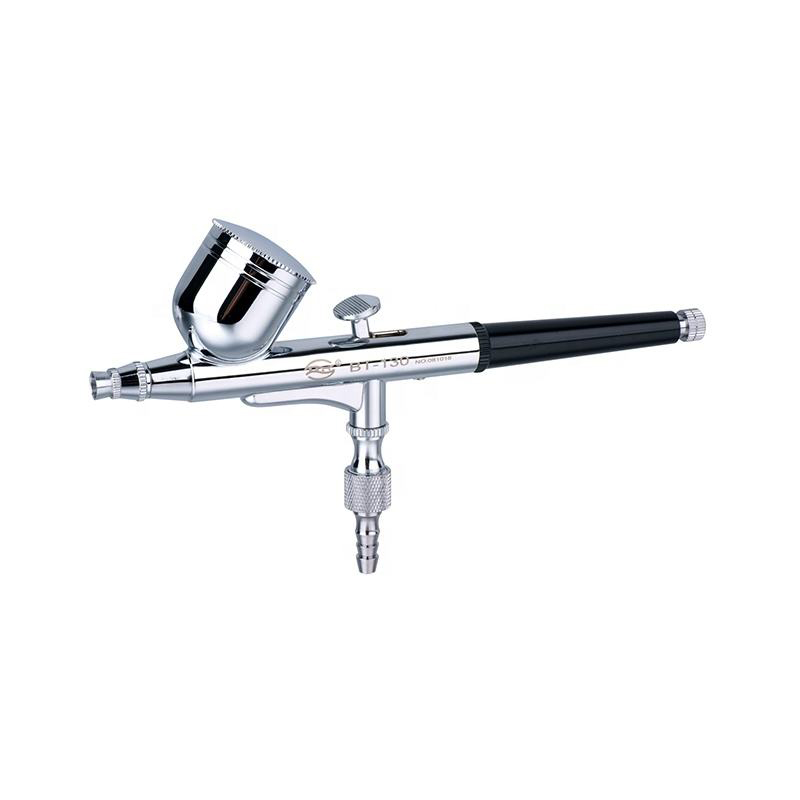
A single-action airbrush releases both air and paint when you press the trigger — simple, but with limited creative control. A dual-action airbrush separates the two: pressing down starts the airflow, and pulling back controls how much paint is released. For most beginners, a dual-action model is the recommended starting point because it gives you precise control over line width and paint volume.
Feed System
Gravity Feed vs. Siphon Feed
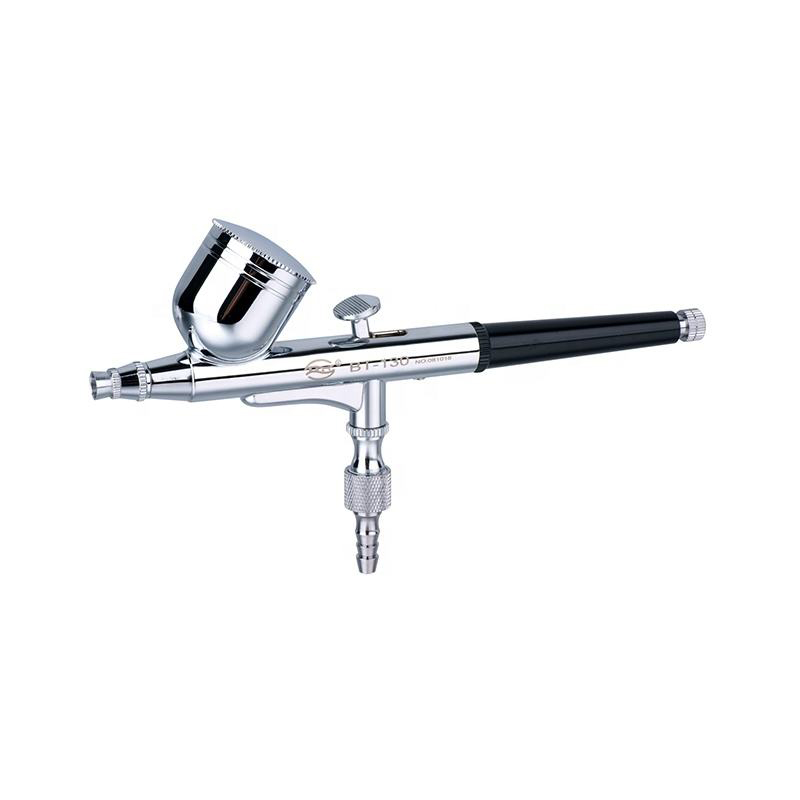
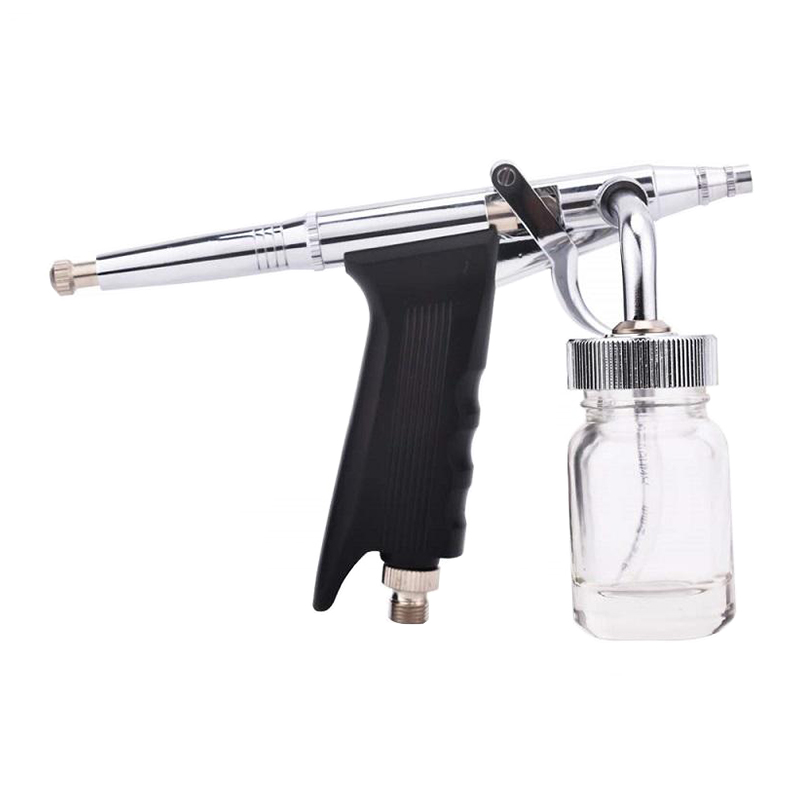
A gravity-feed airbrush has a paint cup on top — paint flows down by gravity, allowing lower air pressures and efficient use of smaller paint quantities. This makes it ideal for detail work and color mixing. A siphon-feed airbrush draws paint from a jar below, suited for large coverage areas. For beginners, a gravity-feed dual-action model is the most versatile starting point.
Precision
Needle and Nozzle Size
Needle size determines the fineness of the spray. A 0.2–0.3mm needle is suited for fine detail and thin lines; a 0.5mm needle works well for general-purpose airbrushing and broader coverage. Most beginners start with a 0.3mm setup, which balances control and ease of use without clogging too easily.
Air Compressor: The Power Behind Your Airbrush
Without a reliable air source, even the best airbrush gun cannot function. The compressor forces paint through the nozzle in a fine mist — a process called atomization. Here is what to look for when choosing a compressor for airbrush painting:
- Built-in air tank: Stores compressed air so the motor cycles off periodically — reduces noise and provides steady, pulse-free airflow critical for smooth gradients.
- Adjustable pressure regulator: Lets you dial in the correct PSI. Most airbrush painting applications fall between 15 and 30 PSI; starting too high causes overspray.
- Moisture trap (water separator): Prevents water droplets from reaching your paint — otherwise expect splattering and inconsistent coverage.
- Oil-free piston design: Avoids contaminating your paint with oil residue from the pump mechanism.
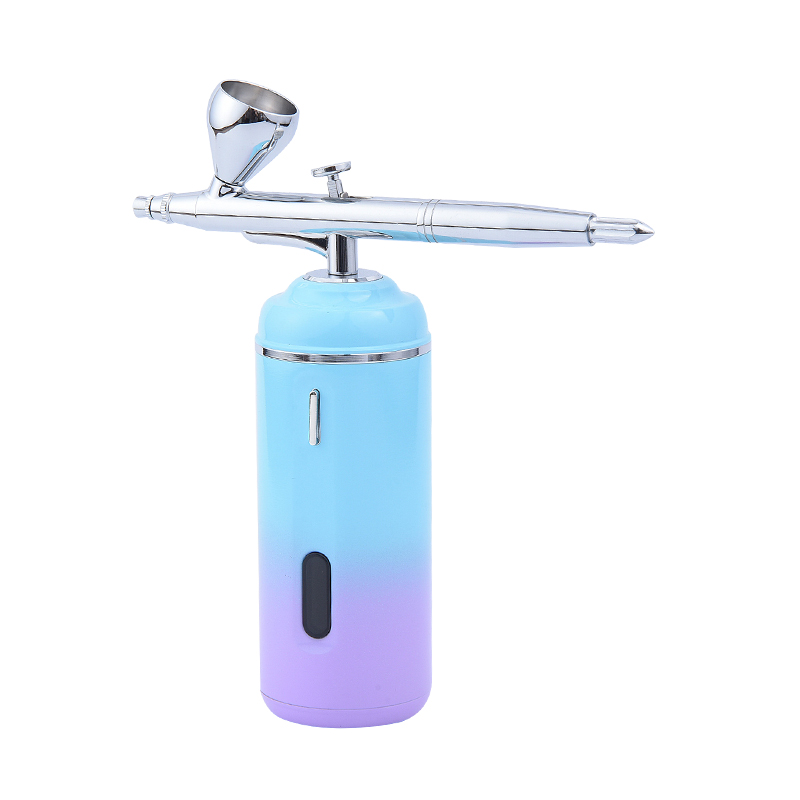
For small to medium airbrush painting projects — miniatures, model cars, nail art, illustrations — a mini compressor with a tank of at least 1.5 litres is a practical starting choice. Cordless battery-powered kits are convenient for occasional small projects, though their runtime is limited.
Air Hose: The Connector You Cannot Overlook
The air hose links the airbrush gun to the compressor. There is an important practical detail: fittings are not universal. Before purchasing, confirm that the hose fittings match the connector type on both your airbrush and your compressor. If they differ, you will need a fitting adapter. Braided nylon hoses are durable and flexible — a length of around 1.5 to 2 metres gives you comfortable working movement without the hose pulling on the airbrush during fine detail work.
Airbrush-Compatible Paints: Getting the Right Consistency
Not every paint works in an airbrush. Paint for airbrush painting needs to be thin enough to atomize properly — roughly the consistency of whole milk — without clogging the needle and nozzle.
| Paint Type | Best For | Thinning Required? | Clean-Up Medium |
|---|---|---|---|
| Water-based acrylic | Miniatures, models, canvas, t-shirts | Usually yes | Water / airbrush cleaner |
| Ready-to-spray airbrush paint | Beginners, general airbrush painting | No (pre-thinned) | Water / airbrush cleaner |
| Solvent-based / enamel | Automotive, hard plastics | Yes (with compatible solvent) | Mineral spirits / dedicated thinner |
| Ink / dye | Illustration, fabric, fine detail | Rarely | Water or alcohol (type-dependent) |
For beginners, ready-to-spray water-based acrylic airbrush paints are the easiest starting point — no thinning needed, low-odour, and clean up with water. If you use standard acrylic craft paints, mix them with a dedicated airbrush thinner to avoid disrupting the pigment binders and causing clogging.
Cleaning Supplies: Non-Negotiable for Every Session
Cleaning is the single most important maintenance habit in airbrush painting. Dried paint inside the needle, nozzle, or paint cup causes clogging, splattering, and equipment damage. These supplies are essential:
- Airbrush cleaner: A dedicated cleaning fluid matched to your paint type for flushing the airbrush between colors and after every session.
- Spray-out pot / cleaning pot: A sealed jar with a rubber insert for safe, mess-free flushing between colors.
- Cleaning brush set: Small pipe-cleaner style brushes in various sizes to clean inside the paint cup, nozzle, and needle channel.
- Cleaning needle / ramrod: A thin rod to clean the length of the needle tube inside the airbrush body.
- Cotton swabs and lint-free cloth: For wiping around the nozzle and needle tip during sessions.
Never let paint dry inside your airbrush. Flush it immediately when switching colors and perform a full disassembly clean after every painting session. This single habit extends equipment life significantly and prevents costly repairs.
Highly Recommended Accessories for Better Results
Once you have the core five items covered, these accessories will make a meaningful difference to your airbrush painting experience:
01
Spare Needles and Nozzles
Airbrush needles are precision components and the most fragile part of the tool. Beginners frequently bend or damage the needle tip in the first few sessions. Always have at least one spare needle in the same size as your airbrush.
02
Mixing Cups and Stir Sticks
Mix and thin paint before pouring it into the airbrush cup to prevent clumps entering the nozzle. Test consistency before loading — it should flow freely like water when tilted.
03
Stencils and Masking Tape
Stencils are especially helpful for beginners — they define crisp edges and let you focus on spray technique. Low-tack masking tape and masking film protect areas you do not want painted.
04
Airbrush Holder
A dedicated airbrush holder (often combined with a spray-out pot) keeps your airbrush upright and safe when not actively painting — essential for preventing accidental needle damage.
05
Protective Gear
Airbrush painting produces fine paint particles in the air. A respirator mask rated for fine particulates and solvent vapours is strongly recommended — especially with solvent-based paints or in enclosed spaces. Safety glasses protect from unexpected spray direction.
Common Beginner Mistakes to Avoid in Airbrush Painting
Even with the right equipment, a few avoidable habits can undermine your early results:
- Using paint that is too thick: Thick paint clogs the nozzle almost immediately. Thin it until it flows freely before loading the airbrush.
- Setting air pressure too high: Excess pressure causes overspray and a grainy texture. Start at 15–20 PSI and adjust from there.
- Moving too slowly: Holding the airbrush stationary while spraying causes paint to pool and drip. Keep your hand moving at a consistent pace.
- Overfilling the paint cup: Only fill what you need — overfilling leads to spills when you tilt or reposition the airbrush.
- Skipping the post-session clean: Dried paint is far harder to remove than fresh paint. Clean immediately after every session, without exception.
What Applications Can You Use Airbrush Painting For?
One of the greatest strengths of airbrush painting is its versatility. The same core equipment serves many creative disciplines:
Scale models & miniatures
Smooth base coats, gradients, and fine detail finishing impossible with a standard brush.
Smooth base coats, gradients, and fine detail finishing impossible with a standard brush.
Custom clothing & footwear
Airbrushed t-shirts and sneakers benefit from even, vibrant color and seamless tonal blending.
Airbrushed t-shirts and sneakers benefit from even, vibrant color and seamless tonal blending.
Nail art & makeup
Portable mini airbrush kits are widely used in professional beauty settings for precise colour application.
Portable mini airbrush kits are widely used in professional beauty settings for precise colour application.
Cake decorating
Food-safe airbrush paints allow blended colours and intricate designs directly onto fondant and icing.
Food-safe airbrush paints allow blended colours and intricate designs directly onto fondant and icing.
Fine art & illustration
Hyper-realistic portraits and poster art where seamless tonal transitions are essential.
Hyper-realistic portraits and poster art where seamless tonal transitions are essential.
Automotive & body art
Custom vehicle paintwork and body art sharing the same precision airbrush painting principles.
Custom vehicle paintwork and body art sharing the same precision airbrush painting principles.
Ningbo Bolt Machinery Electronics & Technology Co., Ltd. manufactures a comprehensive range of airbrush painting equipment — including dual-action gravity-feed airbrushes, mini air compressors, cordless airbrush kits, and complete airbrush sets — all CE & GS certified. With over 15 years of manufacturing experience and an annual capacity of 50,000 airbrushes and 30,000 mini air compressors, their product line covers beginner through professional airbrush painting needs across tanning, tattoo, makeup, model painting, and advertising spray applications.
Your Starter Checklist: Everything Needed to Begin Airbrush Painting
Use this checklist to confirm you have everything in place before your first session:
| Item | Priority | Beginner Recommendation |
|---|---|---|
| Dual-action gravity-feed airbrush | Essential | 0.3mm needle/nozzle |
| Air compressor | Essential | With tank, regulator, moisture trap |
| Air hose (compatible fittings) | Essential | Braided nylon, ~1.5–2 m |
| Ready-to-spray airbrush paint | Essential | Water-based acrylic set |
| Airbrush cleaner + cleaning brushes | Essential | Matched to paint type |
| Spray-out / cleaning pot | Recommended | Combined with airbrush holder |
| Spare needles | Recommended | At least one spare same-size needle |
| Respirator mask | Recommended | Fine particulate / vapour rated |
| Stencils and masking tape | Useful | Low-tack variety |
| Mixing cups and stir sticks | Useful | Small disposable plastic cups |